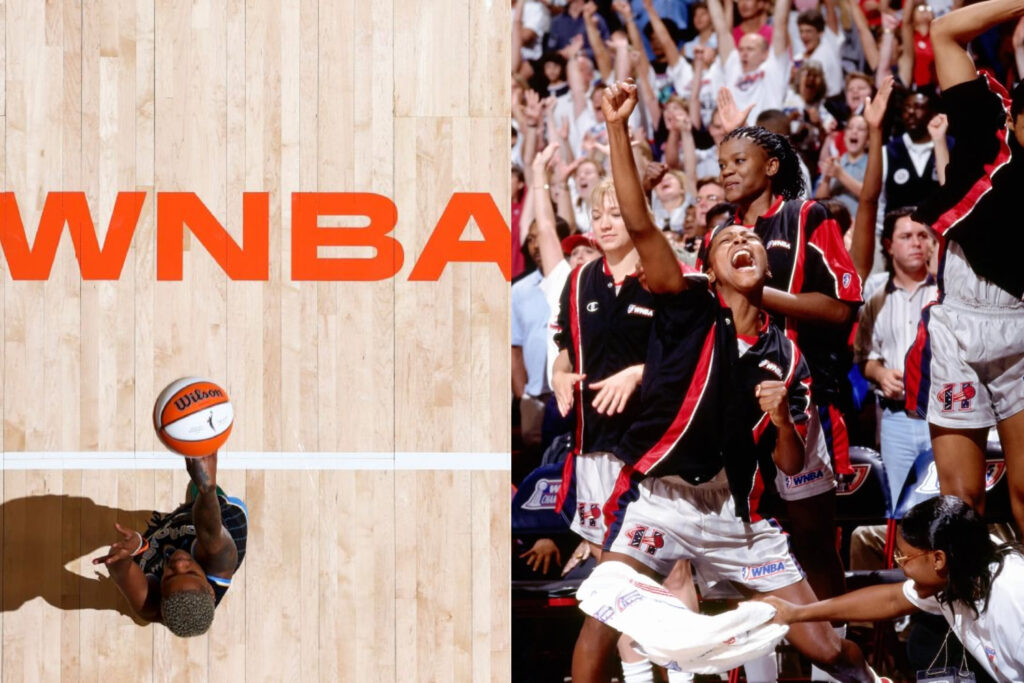
With the 2026 WNBA season set to tip off on May 8, negotiations between the league and the Women’s National Basketball Players Association (WNBPA) remain unresolved, leaving several major offseason events in limbo. The sides are still separated by significant financial differences, particularly in revenue sharing and salary cap structure, as the timeline to complete key league operations continues to shrink.
Before the season begins, the WNBA must finalize an expansion draft, conduct free agency, and hold the college draft. Those steps cannot move forward without a new collective bargaining agreement in place, making the current deadlock increasingly urgent for both parties.
Players reduce demands but still seek larger revenue share
In its most recent proposal, the WNBPA signaled some flexibility by lowering its revenue-sharing demands. The union is now seeking an average of 27.5% of the league’s gross revenue over the life of the agreement, down from the 31% it previously requested.
For the first year of the new deal, players are asking for 25% of gross revenue, along with a salary cap of approximately $9.5 million. That figure is also a reduction from the earlier proposal, which called for a $10.5 million cap.
While the revised offer represents a concession, it has not been enough to satisfy the league, which maintains that the numbers remain financially unsustainable.
EXCLUSIVE: ESPN plans to replace summer’s #SundayNightBaseball with “Women’s Sports Sundays,” a new hub spotlighting top matchups from the WNBA and NWSL.
Executives believe the block could become a new franchise.https://t.co/JgRqOFzD4A pic.twitter.com/OTjE89OPlh
— Variety (@Variety) February 19, 2026
League proposal centers on net revenue model
The WNBA’s counteroffer takes a fundamentally different approach, focusing on net revenue rather than gross revenue. Under the league’s structure, players would receive about 70% of net revenue—income calculated after expenses are deducted.
For the 2026 season, the league has also proposed a salary cap of $5.65 million. When translated into gross revenue terms, the league’s offer would equate to less than 15%, creating a sizable gap between the two sides.
As a result, negotiations remain stalled with an approximate 12.5% difference in first-year revenue sharing and nearly a $4 million divide in the proposed salary cap figures.
Financial projections deepen the divide
League financial projections have further complicated negotiations. WNBA officials previously estimated that the union’s earlier proposal would lead to roughly $700 million in losses over the life of the agreement.
Even after the players reduced their demands, the league reportedly believes the latest offer would still produce approximately $460 million in losses. Those projections have reinforced the league’s stance that the current union proposal is not financially feasible.
Housing benefits emerge as another sticking point
Beyond revenue sharing, player housing has become another major area of disagreement. The league has explored changes to the longstanding policy that requires teams to provide housing for players during the season.
In its latest proposal, the WNBA offered one-bedroom apartments for minimum-salary players during the first three years of the deal, along with studio apartments for developmental players. The plan would gradually phase out housing obligations over time.
The union, however, is pushing to maintain housing support in the early years of the agreement before phasing it out only for players on fully protected, near-max or max contracts.
Players argue that the short length of the WNBA season, combined with the high cost of living in markets such as New York, Los Angeles, and San Francisco, makes temporary housing essential rather than optional. That difference in priorities has added another layer of complexity to already tense negotiations.
Clock ticking toward critical offseason deadlines
With the season’s start date approaching, the unresolved CBA threatens to delay key league operations, including free agency and expansion preparations. Until an agreement is reached, the league’s offseason calendar cannot move forward in full, increasing the pressure on both sides to find common ground.
As negotiations continue, the gap between the WNBA and its players remains substantial, and the coming weeks could determine whether the 2026 season begins on schedule.